
Providence, RI – September 15, 2026 – PRESSADVANTAGE –
Choice Collision Centers has published September consumer guidance focused specifically on how bumper damage is evaluated after an accident. The resource introduces a four-part framework covering the exterior bumper cover, mounting and reinforcement components, adjoining body areas, and vehicle technology located within or near the affected area.
The publication adds a bumper-specific explanation to Choice Collision Centers’ dent and scratch repair information. Rather than using the visible size of a dent, crack, or scrape as the primary indicator of repair complexity, the guidance explains how technicians can evaluate the bumper assembly as a group of related components.
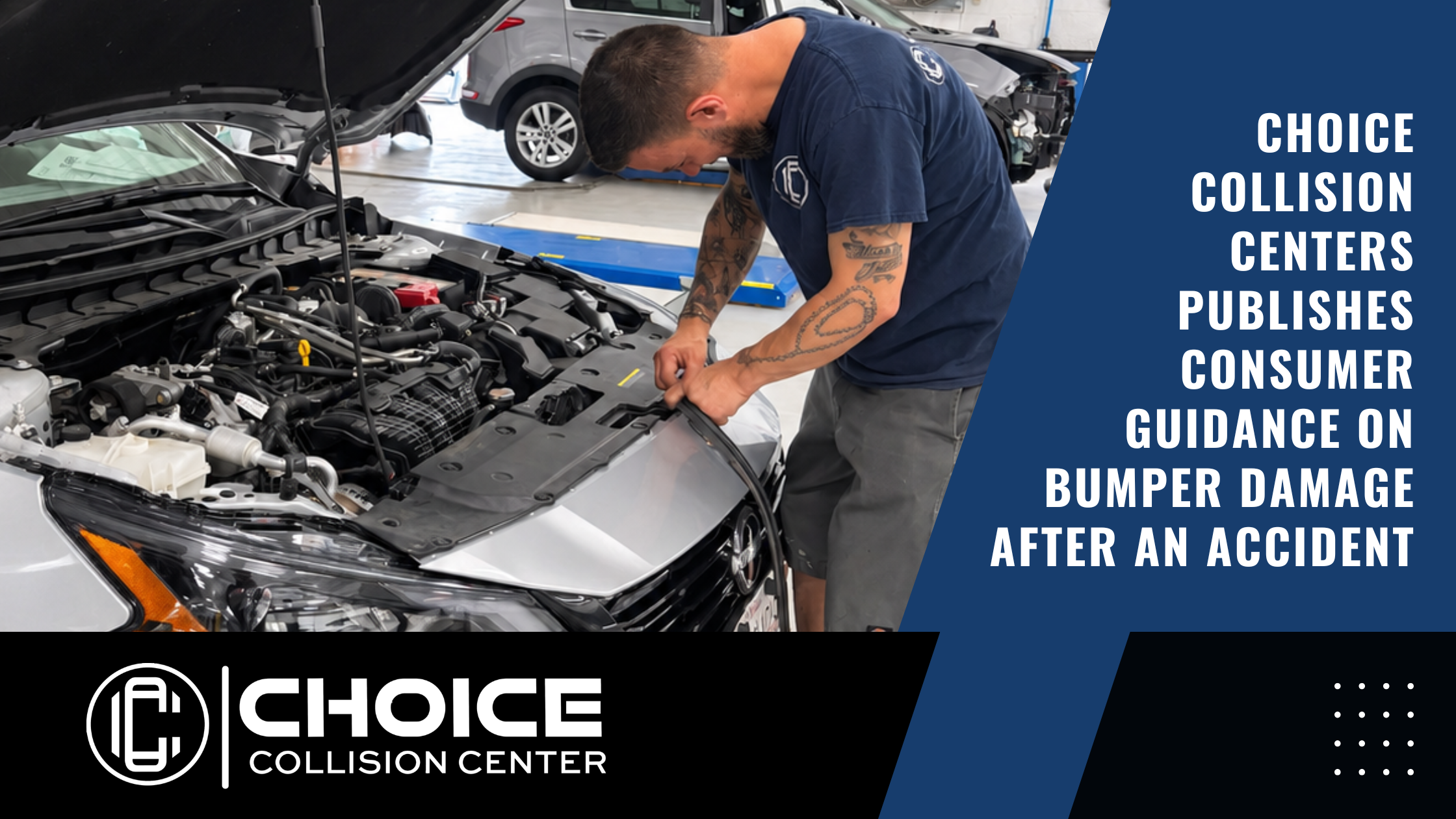
The exterior bumper cover provides the starting point. An impact can leave scratches, scuffs, dents, gouges, cracks, deformation, or changes in the position of the cover. Documenting the type and location of this damage helps identify which portions of the bumper assembly may require further evaluation.
Material and damage location can influence the available repair approach. Many bumper covers are constructed from plastics designed for specific vehicle applications. Damage near an edge, mounting location, sensor opening, or attachment point can present different considerations from damage within another portion of the cover.
The second part of the framework addresses components behind the exterior surface. Depending on the vehicle, these can include energy-absorbing material, reinforcement components, brackets, retainers, fasteners, wiring, and mounting points.
Some of these areas may not be fully visible while the bumper remains assembled. When appropriate, removing the cover provides access for direct inspection. This does not presume that additional damage exists. The purpose is to establish the condition of components associated with the documented impact.
Changes in bumper position can provide useful information during this evaluation. Uneven gaps, partial separation, or displacement relative to adjoining panels can make attachment areas, brackets, or retainers relevant to the repair plan.
The third part of the guidance addresses surrounding body components. Front bumper impacts can occur near grilles, lamps, fenders, and other exterior parts, while rear impacts can involve areas near lamps, quarter panels, trunks, or liftgates. These adjoining components are evaluated when the documented collision indicates involvement rather than as a standard requirement for every bumper repair.
Choice Collision Centers provides additional information about repairing exterior vehicle components through its auto body repair resource.
The fourth part of the framework covers vehicle technology. Modern bumper areas can contain or sit near parking sensors, cameras, radar-related equipment, wiring, and mounting hardware associated with driver-assistance systems.
The guidance distinguishes the presence of this equipment from evidence that it has been damaged. A bumper impact does not automatically establish a sensor failure or calibration requirement. Instead, technicians can identify the equipment installed on the individual vehicle, document its relationship to the collision and planned repair, and review applicable vehicle-specific procedures.
Mounting areas can be relevant because certain electronic components are installed in specified positions. When a collision or repair operation affects a component or its mounting location, manufacturer information can help identify applicable inspection, diagnostic, removal and installation, or calibration procedures.
This component-based approach is the primary focus of the new publication. It expands the discussion beyond cosmetic bumper damage by separating what can be observed on the exterior from the mounting, underlying, adjoining, and electronic components that may be relevant to the individual repair.
The resource also explains how this evaluation can affect repair-versus-replacement decisions. A relatively small damaged area does not automatically make a bumper repairable, while a larger cosmetic condition does not independently establish that replacement is necessary. Material, damage location, component condition, mounting areas, and applicable manufacturer information can contribute to the decision.
When refinishing is part of the repair, the developed plan can also account for preparation and coating procedures associated with the affected bumper surface. These operations follow the determination of how the damaged component will be addressed rather than determining the repair method by themselves.
The September publication also provides context for changes between an initial estimate and a developed repair plan. An exterior assessment can document the visible bumper condition, while appropriate access may later provide information about attachment areas or components that were previously covered.
If additional accident-related conditions are identified, those findings can be documented in the repair plan. When an insurance claim is involved, newly identified damage may also become part of supplemental repair documentation.
The guidance therefore gives consumers a concise sequence for understanding bumper evaluation: document the exterior condition, inspect relevant mounting and underlying components when access is needed, evaluate adjoining areas associated with the impact, identify vehicle technology within the repair area, and apply vehicle-specific procedures to the documented work.
Additional information about the company and facility is available through Choice Collision Centers’ Providence location resource.
The central point of the September publication is that a modern bumper is more than its visible exterior cover. Evaluating the bumper as an assembly allows repair planning to account for the specific components, mounting areas, surrounding parts, and technology associated with the documented collision.
Choice Collision Centers is a locally owned and operated collision repair company established in 1997. The company provides collision repair and auto body repair services in Rhode Island and Massachusetts. Its Providence facility is located at 125 Ernest St, Providence, RI.
###
For more information about Choice Collision Center, contact the company here:
Choice Collision Center (Providence)
Steve Melo
(401) 245-0213
information@choicecollisioncenters.com
125 Ernest St, Providence, RI 02905


