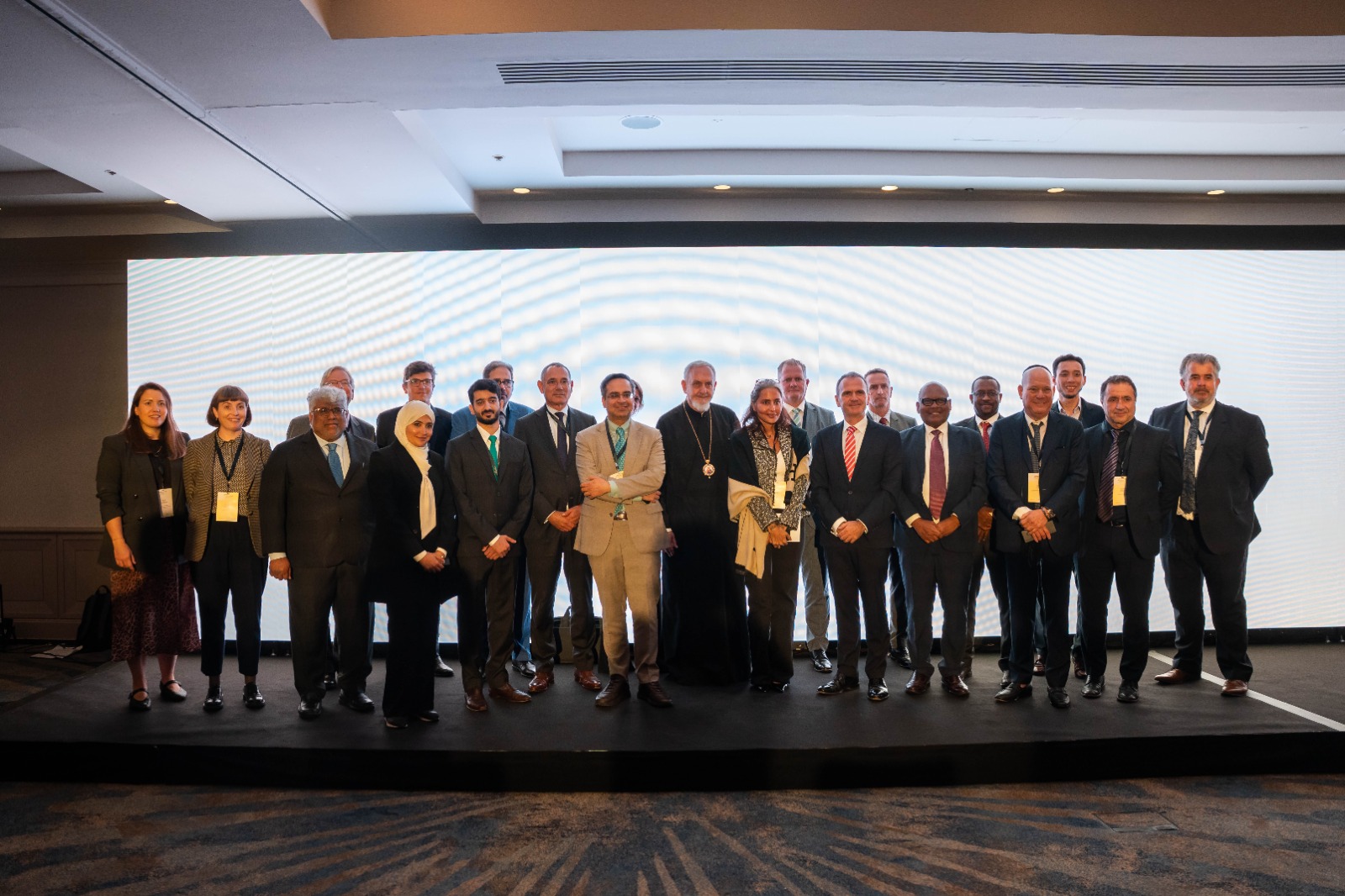
Interfaith Alliance for Safer Communities and An Garda Síochána conclude international conference with “Dublin Principles” for joint action
DUBLIN, IRELAND, August 31, 2026 /EINPresswire.com/ — Law enforcement officials, faith leaders, civil society representatives, academics and international experts gathered in Dublin on 27 August for the Building Cohesive, Safer Communities: Law Enforcement and Faith Partnerships in Preventing Extremism conference, co-hosted by the Interfaith Alliance for Safer Communities (IAFSC) and An Garda Síochána.
The conference brought together Irish and international expertise to examine the evolving threat of radicalisation and, critically, how stronger partnerships between law enforcement and faith communities can help prevent harm while strengthening trust and community resilience.
Discussions addressed the landscape of ideological violence and radical movements in Europe and Ireland, global radicalisation trends, the growing role of digital platforms and emerging technologies in radicalising youth, early behavioural indicators of radicalisation, and practical approaches to prevention, rehabilitation and disengagement.
Experts also argued that faith communities should be treated as independent and equal partners in prevention efforts. Participants emphasised the importance of interfaith dialogue as a mechanism to increase tolerance across society. They highlighted that effective responses must be based on trust, avoid the stigmatisation of communities, and focus on harmful behaviours and ideological manipulation, starting at the family level.
The Interfaith Alliance for Safer Communities and An Garda Síochána announced the Dublin Principles, a joint statement setting out practical areas for continued cooperation between law enforcement and faith communities. The principles outline a comprehensive approach to preventing, detecting and responding to radicalisation.
Dana Humaid, Chief Executive of the Interfaith Alliance for Safer Communities, said: “We have seen in my own country, the United Arab Emirates, how a model of coexistence fostered by cooperation between government, faith leaders, communities can build lasting resilience within families and in society. That’s the spirit of partnership we brought to Dublin.
“Preventing radicalisation cannot be the responsibility of law enforcement or faith communities alone. It depends on trust between all these actors. Dublin has demonstrated the value of bringing partners together listening to one another, sharing expertise and building practical ways to intervene before vulnerability becomes radicalisation and radicalisation becomes harm. The Dublin Principles give us a foundation for turning that dialogue into action.
“To make sure that the Dublin conference is a true success, our shared task now is to translate trust into cooperation. That is how we learn from each other, build capacity to spot and counter radicalisation, and create safer communities.”
Assistant Commissioner Michael McElgunn, Garda National Crime and Security Intelligence Service, said: “An Garda Síochána recognises that radicalisation and violent extremism pose challenges to communities both locally and internationally. This is a serious concern, and we are committed to playing our role in managing and mitigating the threat in collaboration with others. Last week we welcomed faith leaders, academics and international partners to Dublin, as part of a dialogue on how to foster cross-sectoral collaboration in managing the threat of radicalisation to our communities.
“We, in An Garda Síochána, are always guided by the community policing model. By proactively engaging with local communities, we will continue to build trusted relationships, encourage mutual respect and tolerance, and promote social cohesion through community-led initiatives.
“This week’s conference afforded An Garda Síochána the opportunity to strengthen relationships, including those with faith leaders at home and abroad. This experience will lay the groundwork for further collaborative opportunities in countering the growing concern of radicalisation and extremism, and protecting our communities.
“We thank the Interfaith Alliance for Safer Communities for their support, sponsorship and collaboration in making this important event a reality.”
Experts included representatives of faith organisations, academia and specialist counter-radicalisation organisations. The programme featured contributions from analysts and practitioners from Ireland and around the world, with sessions examining regional and global security trends, online radicalisation, community impacts, international prevention models, youth diversion, and the disruption of terrorist financing through the misuse of charitable channels. The role of social media and gaming platforms, in radicalisation, was a reoccurring theme.
Attendees heard best practices on prevention and rehabilitation from the UAE, Singapore and Kenya, and discussed which might be universally applicable.
Reflecting their shared commitment to practical initiatives that make a difference, IAFSC and An Garda Síochána affirmed their intention to explore new capacity-building programmes to equip faith leaders with the skills and knowledge to recognise early signs of radicalisation. Other proposed measures included establishing safe and confidential channels for raising safeguarding concerns and conducting joint awareness sessions between police and community representatives. The importance of multi-agency pathways to support rehabilitation and reintegration was agreed.
Digital safety also featured prominently in the conference. Participants considered the challenges created by artificial intelligence, synthetic media, encrypted communications, online gaming and social media as channels for circulating divisive and radicalising content. The Dublin Principles identify the digital environment as a strategic priority for efforts to counter radicalisation.
Particular attention was given to young people, women and families: groups that can be disproportionately affected by radicalisation but can also play a critical role in building resilience and identifying vulnerabilities at an early stage. Participants supported approaches based on behavioural indicators rather than demographic profiling, alongside accessible support for families concerned about ideological isolation or radicalisation.
The international perspectives shared during the conference highlighted both the increasingly cross-border nature of radicalisation, and the importance of locally grounded prevention and safeguarding.
The Dublin Principles call for dialogue begun at the conference to continue beyond the event. Law enforcement, faith communities and civil society committed to maintaining open engagement, contributing community insights to policy development, and building the capabilities of local officers, faith leaders and grassroots advocates through appropriate guidance, tools and training.
Press Office
Interfaith Alliance for Safer Communities
info@iafsc.org
Legal Disclaimer:
EIN Presswire provides this news content “as is” without warranty of any kind. We do not accept any responsibility or liability
for the accuracy, content, images, videos, licenses, completeness, legality, or reliability of the information contained in this
article. If you have any complaints or copyright issues related to this article, kindly contact the author above.

Media gallery