
Key Takeaways
- Heart rot decays the heartwood at the core of a tree while the canopy and bark can still look healthy.
- The fungus Fomitiporia dryophila enters through wounds and spreads as white rot, reducing load-bearing strength over years.
- A woody, hoof-shaped conk on the lower trunk is a late-stage warning that decay has reached deep inside.
- Oaks and other common Texas hardwoods are the most frequent hosts, especially in humid, drought-stressed, and aging tree populations.
- No fungicide reverses heart rot, so professional evaluation and structural management are the practical path forward.
Heart rot is one of the most underestimated threats to mature trees across Texas, and it often advances for years before anyone notices. A detailed overview of heart rot in Texas trees explains how the fungus takes hold inside the trunk while the tree still appears healthy on the surface. Recognizing the problem early is the difference between managing a tree and losing it without warning.
How the Fungus Takes Hold The fungus responsible, Fomitiporia dryophila, belongs to the Hymenochaetaceae family and specializes in breaking down heartwood, the dense structural core of a tree. Infection usually begins when spores settle on exposed wood left by pruning cuts, storm damage, or mechanical injuries from equipment. From there the fungus grows inward and upward, digesting lignin, cellulose, and hemicellulose in a slow process known as white rot. The affected heartwood turns pale, stringy, and fibrous, losing much of the strength that keeps a tree standing. Because the process is internal, a tree can carry the fungus for years while the canopy and bark still look normal, and failure, when it comes, tends to be sudden and dramatic.
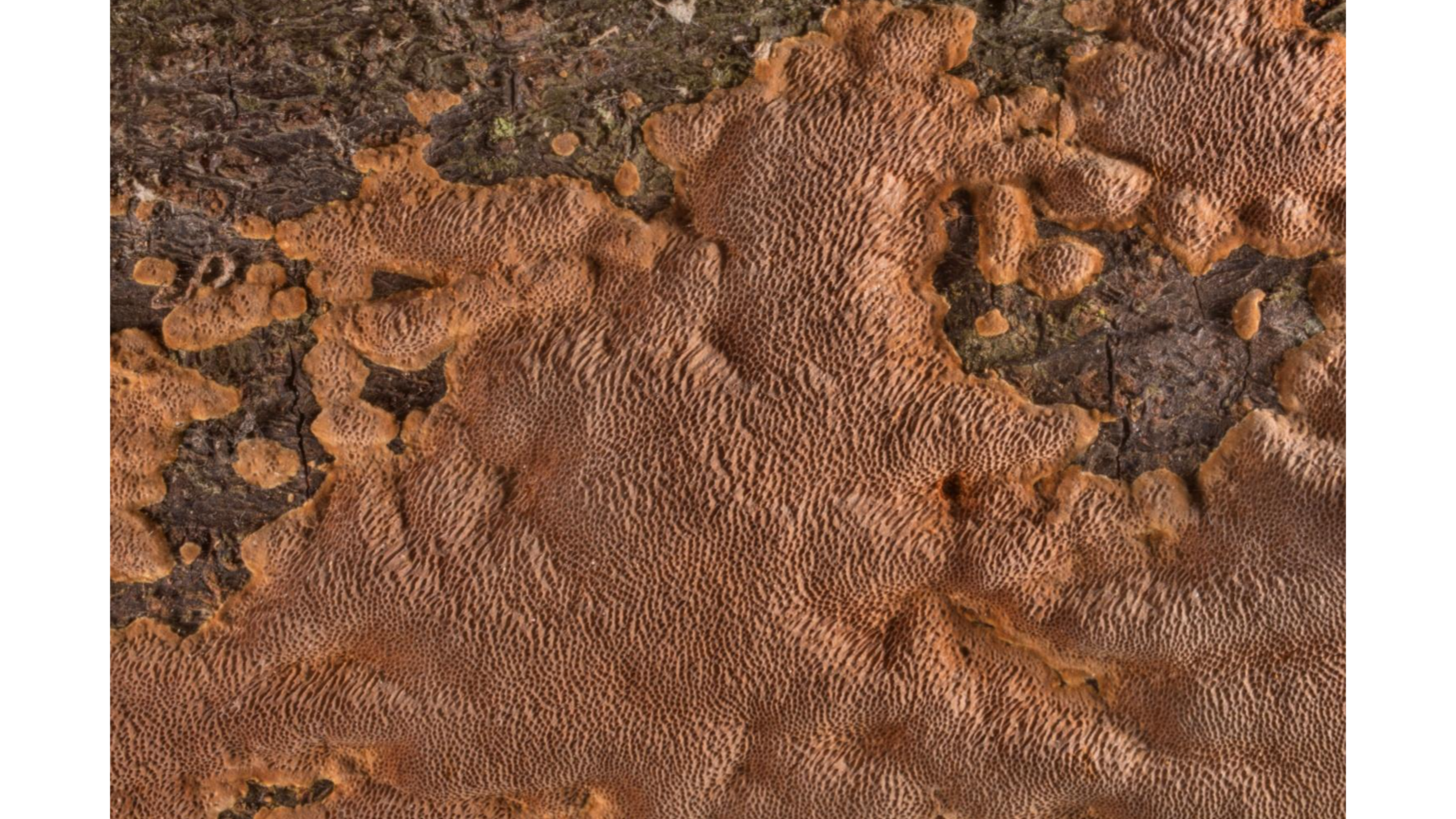
The Warning Sign of a Conk The clearest external clue is a conk, the fruiting body the fungus forms on the trunk. These perennial structures add new growth rings each year and resemble dark, woody, hoof-like shelves with a lighter underside full of tiny pores. A conk on the lower trunk usually appears only after decay has advanced deep into the heartwood, which is why Texas arborists treat it as a serious late-stage signal rather than a harmless mushroom.
Texas Species and Conditions Most at Risk Oaks are the most common hosts, including red oak, post oak under drought stress, water oak, and live oak, along with pecan, hickory, sycamore, and elm. Texas conditions make matters worse. High Gulf Coast humidity feeds fungal growth, repeated drought and flood cycles create entry wounds, and compacted clay soils slow recovery after injury. Warm winters allow the fungus to stay active longer than it would in colder regions. Many communities also planted large numbers of the same species decades ago, so entire areas are reaching vulnerable maturity at the same time.
Assessing the Risk Since heart rot hollows a tree from the inside, outward appearance says little about stability. Certified arborists use mallet sounding, resistance drills, and sonic tomography to gauge internal decay, and they weigh lean, proximity to homes, driveways, and play areas, the size and location of the conk, and overall branch architecture. Decay near the base of a large oak signals the highest risk of sudden failure, a pattern seen across Houston, Austin, and San Antonio.
Managing Affected Trees No fungicide can reverse heart rot, and the interior of a tree cannot be sterilized. Management focuses on preserving remaining strength and lowering stress. Crown reduction and selective pruning can reduce the mechanical load on weakened limbs, while improved soil conditions through vertical mulching, compost, biochar, and deep-root feeding support overall health. Added mulch coverage and reduced turf competition help the root zone, avoiding unnecessary cuts limits new points of entry, and annual monitoring tracks whether decay is advancing. When a tree becomes hazardous, removal remains the safest outcome.
Protecting Mature Texas Trees Live oaks and other mature hardwoods define communities from Katy to The Woodlands to San Antonio, which is why early recognition matters so much. Spotting a conk, tracking changes over time, and acting before failure can extend the safe life of a valued tree. Property owners who suspect internal decay can schedule a professional tree evaluation with Tree Care, Inc. to determine the safest path forward.
Tree Care, Inc.
1 713-850-8466
106 South Market Street
Brenham
Texas
77833
United States


